
Free Storm Inspections

HAIL DAMAGE
HIDES IN PLAIN SIGHT

Hail damage on a roof often hides. You might not see missing shingles from the ground, but the protective surface can be quietly compromised — and it gets worse with every season until it finally leaks. This is the plain-English guide to the signs of hail damage, what to do the moment you suspect it, and how the claim works. Our free hail damage roof inspection is identical to the one your insurance carrier performs.

Fully Insured
Free Roof Inspections
10-Year Workmanship Warranty
Locally Owned
BBB A+ Rated

Know the Signs

WHAT HAIL ACTUALLY DOES
TO A ROOF

Roof hail damage is less about what you can see and more about what you can't. Here is what a hailstorm actually does to the surface over your head — and the signs of hail damage worth acting on.

Shingle Bruising

The most common form of roof hail damage, and the hardest to see: an impact fractures the shingle mat beneath the surface without tearing anything off. From the driveway the shingle looks perfectly fine, but that subsurface bruise has already broken the water barrier and will let moisture in long before you ever notice a leak. Up close, it is obvious to an adjuster — and to us.

Granule Loss

The colored granules on a shingle are its sunscreen. Hail knocks them loose, and once the asphalt underneath is exposed, UV begins aging that shingle years ahead of schedule. The clearest early sign of hail damage to roof shingles is a pile of granules washing out at the bottom of your downspouts after a storm — that is the first place to look.

Cracks That Grow

Hail leaves small cracks and fractures that do not stay small. Every WNC freeze-thaw cycle works water into them and pries them a little wider, until one season the crack finally lets water reach the deck. What looked cosmetic the week of the storm becomes an active, expensive leak months or even years later.

Dented Metal

Vents, flashing, gutters, and downspouts take visible dents that the shingles hide — which makes soft metal some of the best evidence you have. It helps date and prove the storm for your insurance claim, and if the metal got hit that hard, the shingles almost certainly took impacts too.

The Fingertip Test

Real hail bruising is confirmed by feel, one impact at a time. An inspector presses a suspected hit with a fingertip — a genuine hail bruise gives slightly, because the shingle mat beneath the surface has been fractured. That soft give is how we separate true hail damage from what insurance calls mechanical damage, like a hammer tap or blunt strike, and from ordinary wear — neither of which has it. The slope itself does not feel soft; only the small hail hits do.

Beyond the Roof

Hail rarely stops at the roof. Our inspection covers the gutters, skylights, windows and screens, garage doors, siding, and fascia — everything the same storm touched — because a complete claim captures all of it, not just the shingles. Damage left off the first scope is money left on the table.

Learn More

The Big Question

WHAT DOES HAIL DAMAGE
LOOK LIKE ON A ROOF?

One of the most common questions we hear is exactly that: what does hail damage look like on a roof? The honest answer is that it is usually subtle, and it frequently takes weeks or months to announce itself — which is precisely why a professional inspection beats a guess from the driveway. The signs are there; you just have to know where to look, and get up close enough to see them.

The most reliable ones are small, dark impact marks scattered randomly across the shingles, soft or spongy spots where the protective granules have been knocked away, granules washing out of your downspouts, and physical dents on metal vents, flashing, and gutters. Any one of these is reason enough for a closer look. Together, they usually mean it is time to get documented before the claim window closes.

  • Small, dark impact marks scattered randomly across the shingles
  • Soft, spongy spots where the protective granules are gone
  • Granules collecting and washing out of your downspouts
  • Dents on metal vents, flashing, gutters, and downspouts

What To Do

AFTER THE HAIL,
STEP BY STEP

01

Note the storm

Write down the date the storm hit and roughly how big the hail was — even a quick phone photo of hailstones next to a coin helps establish the event for your claim later. Insurers care about when the damage happened, and a little documentation now saves a lot of back-and-forth down the road.

02

Look low, not up

You can check for signs safely from the ground: look for granules collecting in gutters and downspouts, and dents on metal vents, flashing, and gutters. Please stay off the roof itself — wet or hail-scattered shingles are dangerous, and getting up there is our job, not yours.

03

Free inspection, fast

Hail damage is easiest to confirm while it is fresh, so we get out quickly and inspect every slope by hand and by drone, documenting each impact the way your carrier requires. The sooner it is on record, the stronger your claim — and the smaller the chance the window quietly closes on you.

04

Repair, replace, or claim

Isolated damage on a slope or two gets repaired. Widespread damage across the roof becomes an insurance conversation — and that is exactly the fight we are built for, having spent over a decade documenting hail claims and meeting adjusters on Western North Carolina roofs.

HOW BIG DOES HAIL
NEED TO BE?

Quarter-sized hail — about one inch across — can compromise shingle surfaces, especially on older roofs. Wind speed, impact angle, and roof slope all factor in, which is why two neighbors can take the very same storm and come out with completely different damage. You do not need baseball-sized hail to have a real problem on your hands.

Hail damage is sudden and randomly scattered; ordinary wear is gradual and even. That distinction is exactly what insurance adjusters look for, and exactly what we document: close-up photos from multiple angles, grouped per slope, with the size and pattern of each impact noted so the evidence holds up without back-and-forth.

  • If your neighbor's roof took hail, get yours checked — claim windows close
  • Class 4 impact-resistant shingles can earn insurance premium discounts
  • No leak yet doesn't mean no damage — bruising leaks next year, not this week
  • We meet your adjuster on-site with the documentation ready
Schedule a Free Inspection
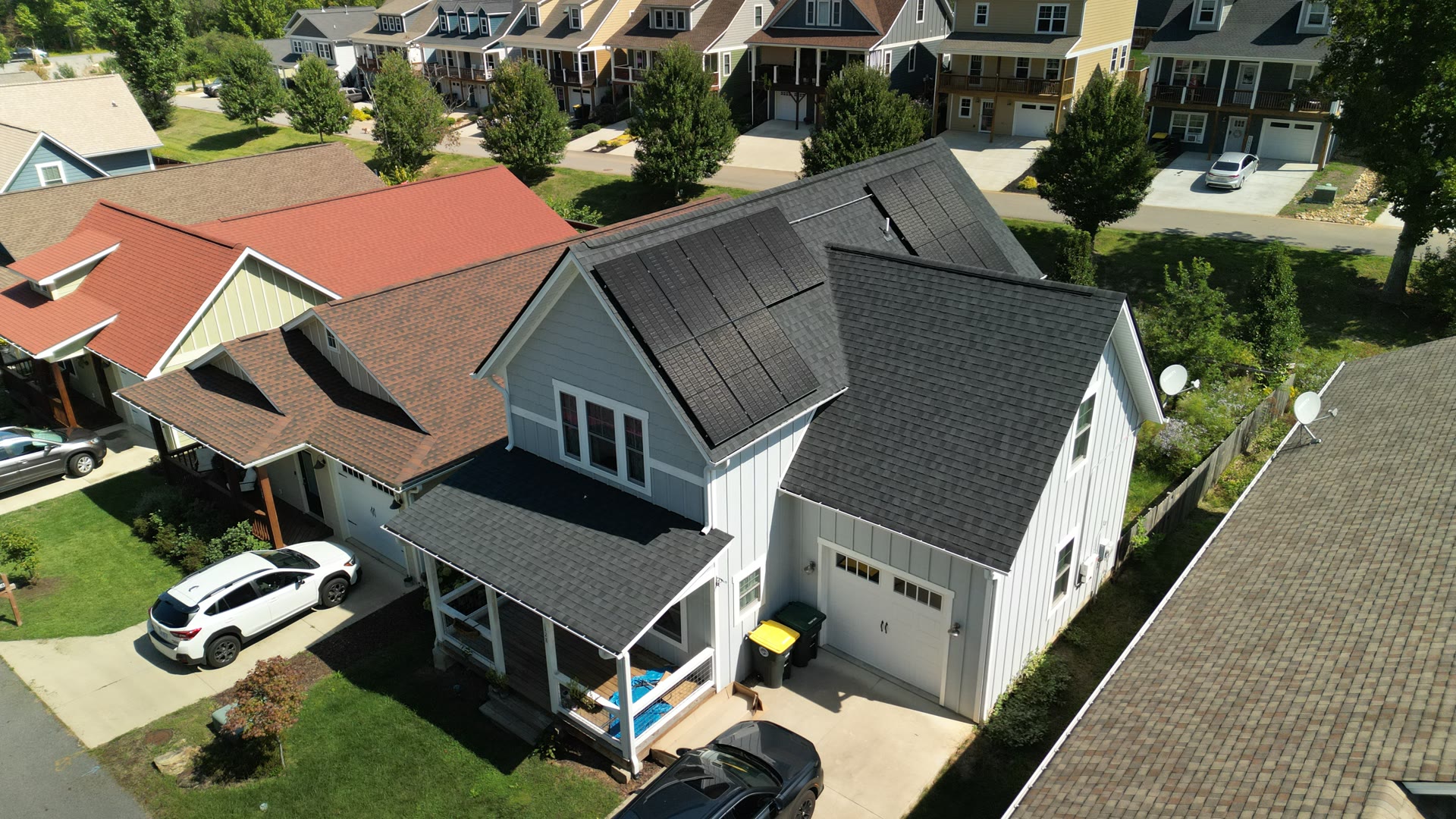
Close-up aerial view of an asphalt shingle roof surface, the detail where hail impacts and granule loss are inspected

1"

quarter-sized hail is enough to compromise an aging shingle roof

Western North Carolina homeowners trust RuFR USA to find what a hailstorm left behind — and win the claim that fixes it — five stars at a time.

What Homeowners Say

5-STAR RATED ACROSS WESTERN NC

"Amazing experience all around. Parker was very helpful through the whole process. I had never had a new roof put in before, or dealt with insurance company claims. Parker was there every step of the way. The crew were great. They were in and out in one day. Excellent job picking up debris. I would highly recommend them."

Jason S.Asheville, NC

"Parker got me a new roof! His expertise in removing/reinstalling solar panels and roofing made him the one-stop choice for services. The new roof looks great with no leaks!"

Thomas Y.Fletcher, NC

"Parker and his guys did a fantastic job replacing our roof which has 40 solar panels installed on it. We were promised a 10 year warranty on both the roof and solar, something other companies weren't able to do because they didn't do both trades. We had leaks before and now we don't - SO HAPPY"

Mike K.Hendersonville, NC

Questions & Answers

FREQUENTLY ASKED QUESTIONS

Quarter-sized hail — about one inch — can compromise shingle surfaces, especially on older roofs. Wind speed, angle, and slope all factor in.

HAIL CAME THROUGH?
GET DOCUMENTED NOW.

Free hail damage inspection anywhere in Western North Carolina — carrier-grade documentation before the claim window closes.

(828) 222-3276

Free inspection · Fully insured · 10-year workmanship warranty