
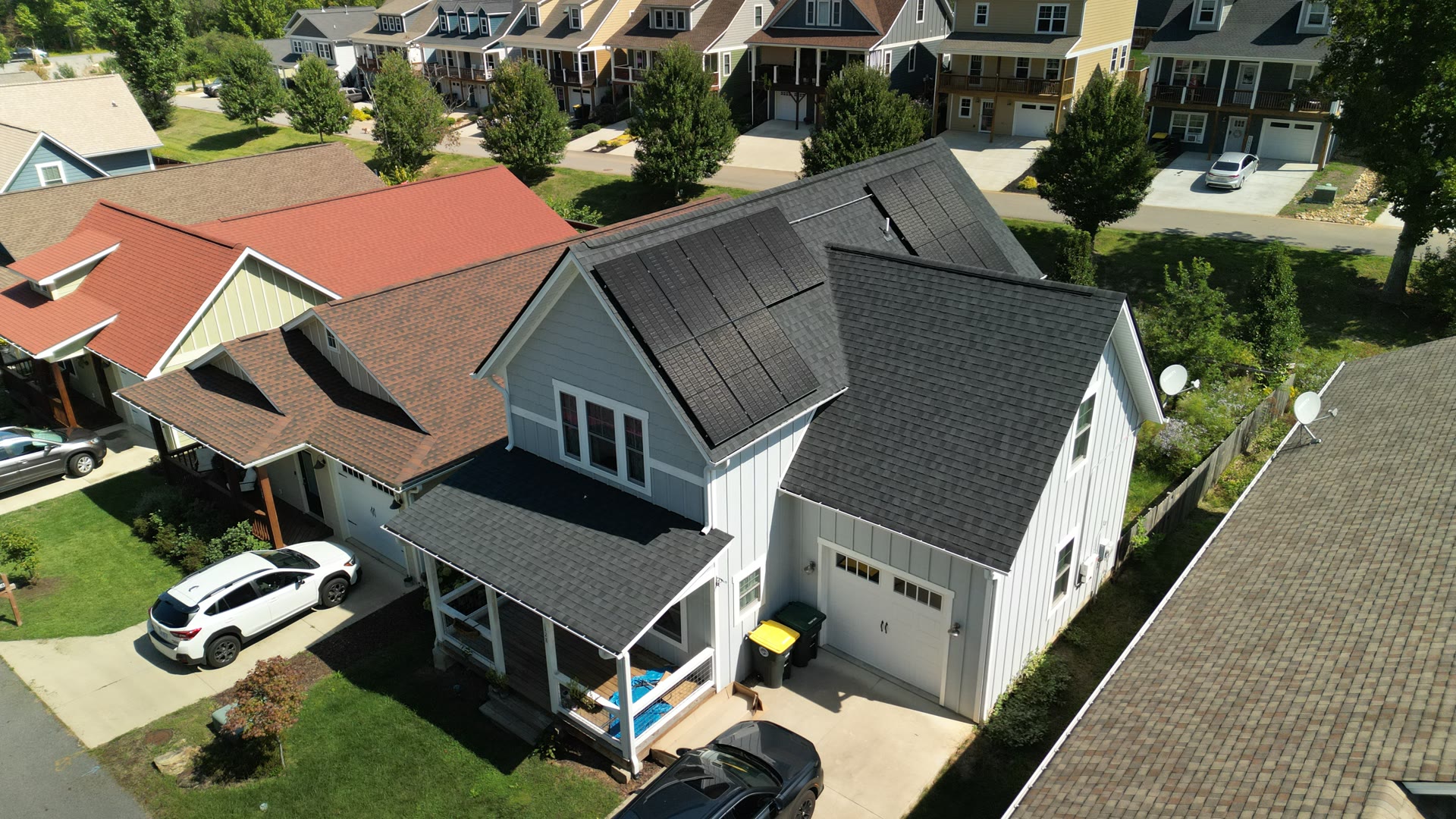
WIND DAMAGE
LOOKS MINOR. ISN'T.
A roof doesn't need to be torn apart for real problems to begin. Mountain gusts break shingle seals invisibly — and every storm after that works the damage wider. RuFR USA installs systems rated for 110–160 mph for a reason.
Looks Minor, Isn't
WIND DAMAGE ROOF REPAIR IN ASHEVILLE
& ACROSS WESTERN NC
Need wind damage roof repair in Asheville, NC? Wind damage rarely looks dramatic — a roof doesn't have to be torn apart for real problems to start. Once a shingle loses its seal, every gust and rainstorm after that works the damage wider, letting moisture in and weakening the layers that keep your home dry. RuFR USA finds that damage while it's still small, documents it for insurance, and repairs it before the next storm makes it worse.
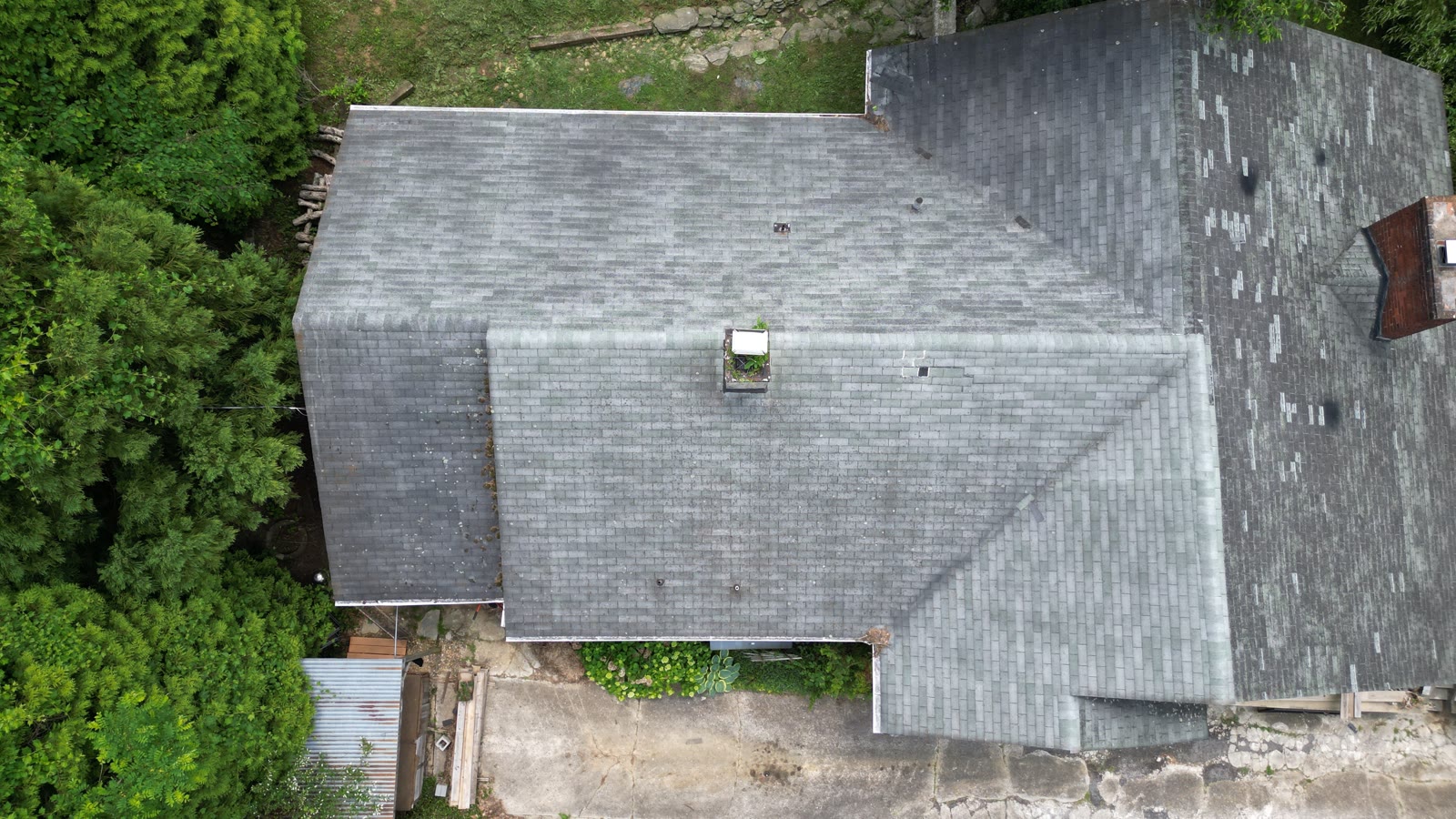
The tricky part is that a wind-damaged roof usually still looks intact from the street — the defensive layer has been compromised, but the shingles sit right where they always did. Mountain terrain makes it worse here than the flatland wind maps predict, funneling straight-line gusts through gaps and gorges. Understanding how wind actually damages a roof is what helps you take the right next step instead of waiting for a leak to make the decision for you.
How It Happens
WHAT WIND DOES
TO A ROOF
Broken Seals
Gusts get under a shingle's edge and break the adhesive bond that holds it sealed flat. The shingle often settles back down looking completely normal — but the seal is gone for good, and from the ground you'd never know. That broken seal is now an open door for wind-driven rain.
Progressive Damage
Once a shingle has lifted once, it lifts more easily the next time — and each wind event works the loosened area a little wider. What starts as a single lifted edge after one storm becomes a slope-wide problem over a season of them, which is exactly why catching it early matters.
Rain Follows the Lift
A broken seal doesn't leak on a calm day — it waits for weather. Wind-driven rain slides sideways under the lifted shingle, soaks into the underlayment, and travels the decking and framing before it ever shows up as a stain indoors, often days or weeks after the storm that caused it.
Missing Ridge Caps
Ridge caps and edge shingles take the highest uplift pressure on any roof, so they're the first to go in a windstorm. Missing caps expose the most vulnerable seam on the roof — the ridge line — directly to the weather, and that's a fast track to interior leaks if it isn't addressed quickly.
Attic Tells the Truth
A lot of wind damage is easier to confirm from inside than from the street. Lifted nails, thin lines of daylight at the seams, displaced insulation, and dust trails from moving air all point to seals that have broken and materials that have lifted above — which is why our inspection always includes the attic.
Gap-and-Gorge Gusts
WNC's terrain funnels straight-line winds through gaps and gorges at speeds the flatland wind maps never predict. Exposed ridgelines and homes that catch the funnel take real abuse — one reason we install wind-rated systems by default here instead of treating high wind as somebody else's problem.
What To Do
AFTER A WINDSTORM,
IN ORDER
1. Ground check only
After the wind dies down, walk your property and look from the ground — shingles or debris in the yard, raised or crooked shingles on the roof, displaced flashing. Stay off the ladder and off the roof; storm-loosened areas are unstable. This is a look-don't-touch step: you're gathering clues, not making repairs.
2. Photograph what you find
Take dated photos of anything that looks shifted, missing, or out of place — debris in the yard, shingles in the gutter, a bare patch on a slope. It costs nothing and it strengthens an insurance claim later, giving the adjuster a timestamped record of what the storm did before anyone touched it.
3. Free inspection before the next storm
We come out and check the places wind actually hits — seal adhesion across the slopes, the edges and ridges, the flashing, and the attic — by hand and by drone. Because wind damage compounds with every following gust, getting it documented before the next system rolls through is the difference between a small fix and a big one.
4. Repair, replace, or claim
Then you get the honest verdict in writing. Damage clustered near pressure zones — edges, ridges, corners — is wind, and usually a covered claim; even wear spread evenly across the slopes is age, and usually isn't. We document which one you have with photos, so the answer is based on evidence, not a sales pitch.
HOW STRONG IS
STRONG ENOUGH?
Gusts between 45 and 60 mph can loosen shingles, especially on aging roofs — and WNC's terrain-funneled winds hit those numbers routinely. Repeated exposure compounds: the tenth windstorm finishes what the first one started.
It's also why we install wind-rated systems by default: 110 mph standard on CertainTeed Landmark, upgradeable to 130–160 mph with enhanced installation — which we do on exposed ridgelines without being asked.
- Wind damage clusters at edges, corners, ridges, and vents
- A resettled shingle with a broken seal looks fine and leaks later
- Insurance covers wind damage; the documentation makes the claim
- Free inspections typically take 5–10 minutes
160
mph max wind rating available with enhanced Landmark PRO installation
Western North Carolina homeowners trust RuFR USA to find what the wind actually did — and document it right. Here is what they say.
What Homeowners Say
5-STAR RATED ACROSS WESTERN NC
"Parker and his guys did a fantastic job replacing our roof which has 40 solar panels installed on it. We were promised a 10 year warranty on both the roof and solar, something other companies weren't able to do because they didn't do both trades. We had leaks before and now we don't - SO HAPPY"
Mike K. — Hendersonville, NC
"Parker and his crew did an amazing job on our roof! It looks better than I hoped! Parker was great throughout the process. It took a little longer than we thought but it was due to Hurricane Helene. We are thrilled with our new roof!"
Alex T. — Mill Spring, NC
"Rufr recently replaced our roof and several other items that had been damaged in a hail storm. I cannot say enough to describe the courtesy and efficiency they exhibited and the very professional manner in which they did their job. I heartily recommend them for any roofing needs you may have."
Lonnie H. — Arden, NC
Where We Work
WIND DAMAGE REPAIR ACROSS
WESTERN NC
Wind damage inspections and repairs for homes throughout the mountains — Asheville, Hendersonville, and every town in between. Tap yours, or just call.
Questions & Answers
FREQUENTLY ASKED QUESTIONS
Edges, corners, ridges, and around vents — uplift pressure concentrates there. Shingles in those zones can look intact while the adhesive seal is broken.
THE WIND ALREADY BLEW.
FIND OUT WHAT IT DID.
Free wind damage inspection anywhere in Western North Carolina — before the next storm finds the weak spots first.
(828) 222-3276Free inspection · Fully insured · 10-year workmanship warranty