
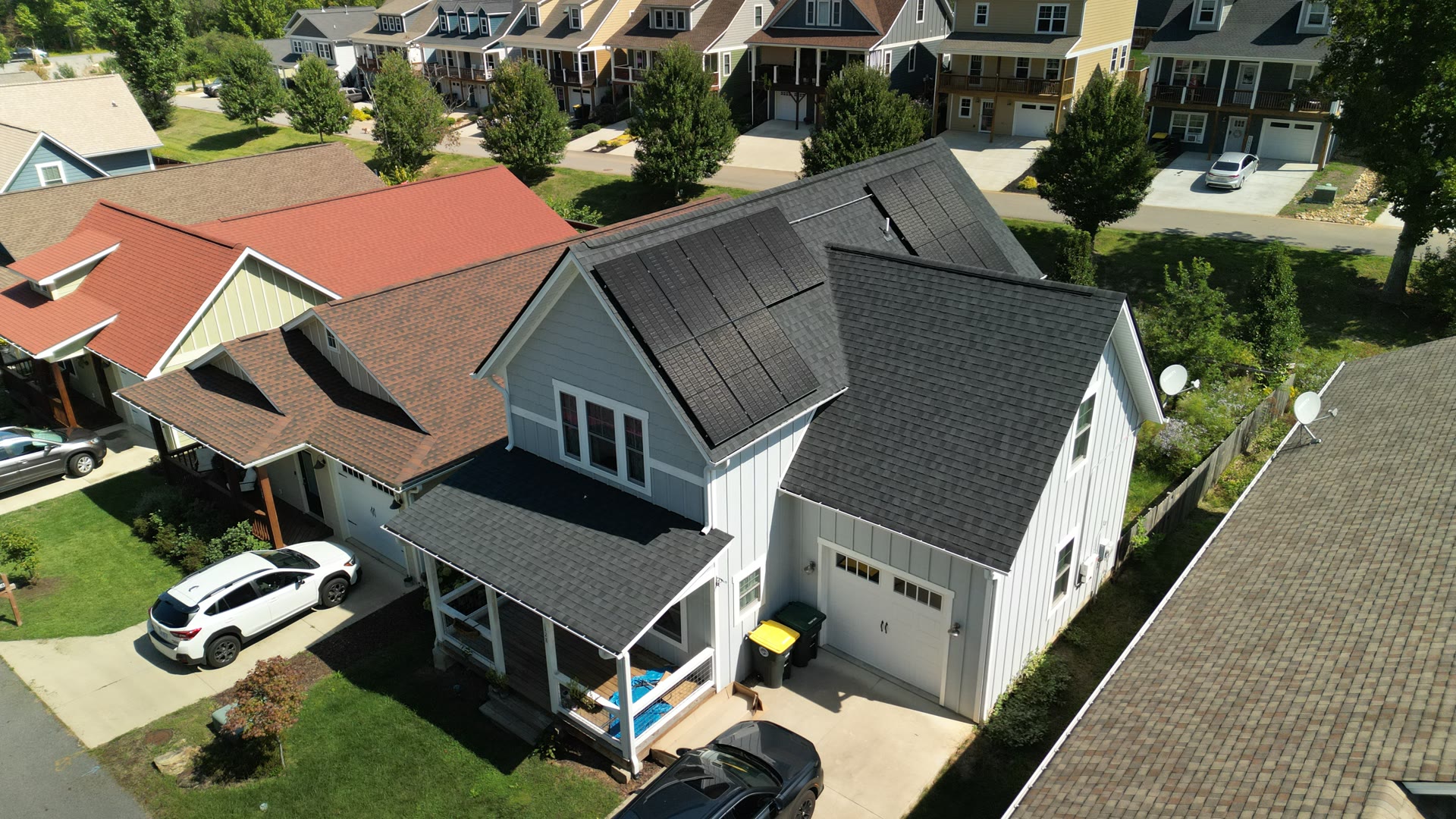
LOW SLOPE ROOFING
PITCH CHANGES EVERYTHING
Between flat and steep sits the slope range where most roofing mistakes happen — shallow enough that standard shingles fail early, but not flat enough that everyone treats it like the membrane roof it needs to be. RuFR USA inspects, repairs, and replaces low-slope roofs across Western North Carolina with materials rated for your exact pitch, not a guess. Get the pitch and the system wrong and it leaks within a few years; get them right and it protects for decades.
Systems
LOW-SLOPE MATERIALS
BY PITCH
On a low slope, the material has to match the pitch — there is no one-size-fits-all answer. Here is what we install and when each one is right.
Modified Bitumen
A multi-layer asphalt membrane with real puncture resistance and built-in redundancy, reliable through WNC freeze-thaw winters and foot traffic. A proven workhorse for low-slope sections that see weather from every direction.
TPO & EPDM
Single-ply membranes for the flattest pitches, where overlapping materials can't shed water fast enough. TPO is a reflective white membrane that cuts cooling load; EPDM is a black rubber membrane that stays flexible through cold mountain winters.
Low-Slope-Rated Shingles
Architectural shingles are rated down to a 2:12 pitch when paired with the right enhanced underlayment — the clean, cost-effective solution for the low-slope sections of an otherwise shingled roof, so the whole roof matches.
Mixed Roofline Tie-Ins
Porch roofs, additions, and dormers tied cleanly into the main roof — the transition between a steep section and a low-slope one is exactly where most WNC low-slope leaks actually start, and where careful flashing work earns its keep.
The Process
LOW-SLOPE PROJECTS,
MEASURED FIRST
Measure the actual pitch
Low slope means anything under a 3-in-12 pitch — less than 3 inches of rise for every 12 inches of run. We measure it exactly rather than eyeballing it, because the entire material decision — and whether standard shingles are even an option — hangs on that number.
Inspect where it hides
Low-slope problems cluster at the penetrations, seams, and drainage low spots where water lingers. Found early, they are inexpensive repairs; left alone, they become the full replacement nobody wanted to pay for.
Fix the root cause
Low-slope failures start at seams, flashings, and penetrations — not out in the field of the roof. We trace the water to where it actually enters and fix that, instead of patching the ceiling stain several feet away where it finally dripped through.
Replace with the right system
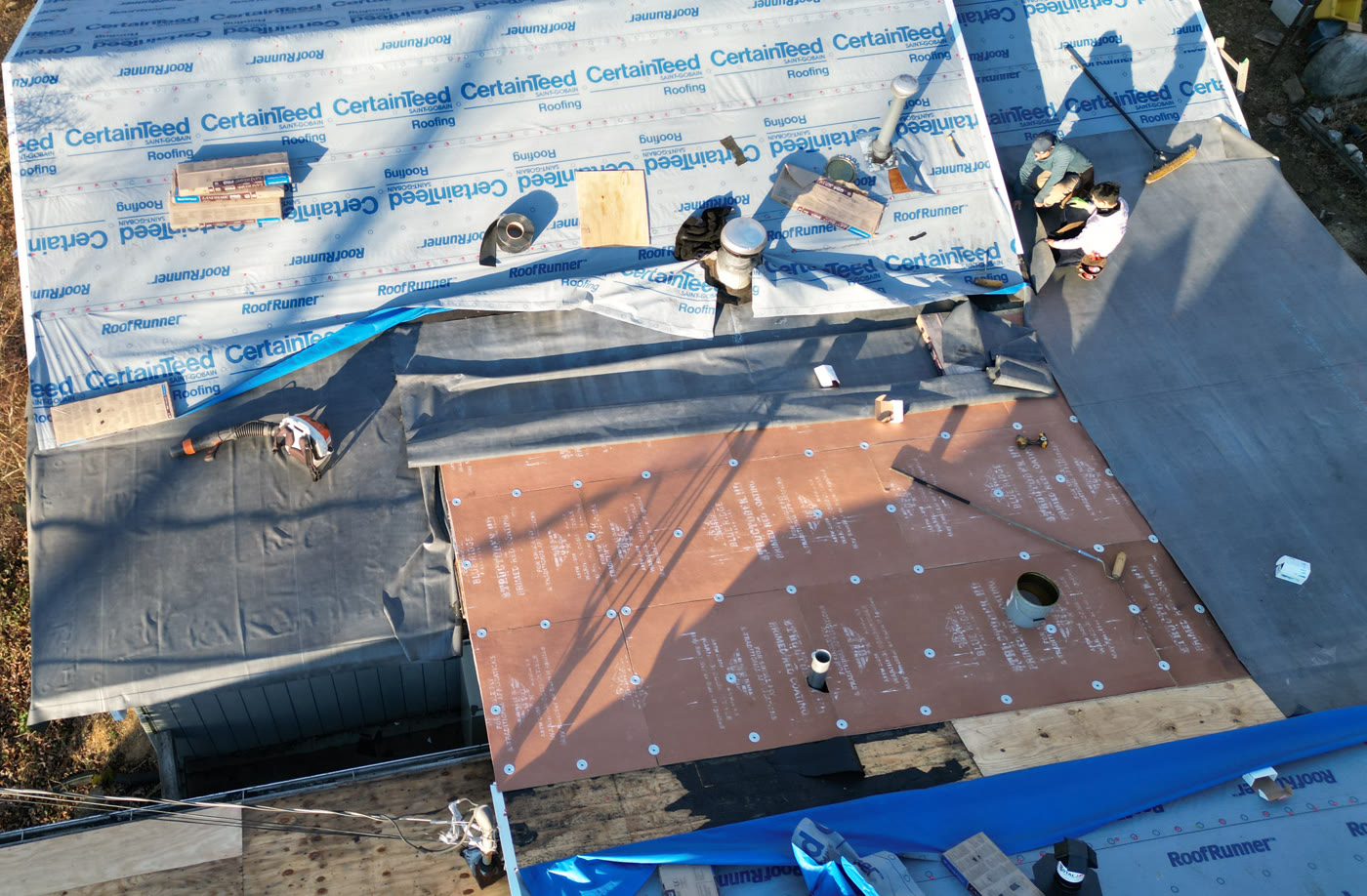
When replacement is the honest call, it is a full tear-off with a deck assessment underneath and the correct membrane or shingle system for your measured pitch — finished in one to three days on most homes.
WHY STANDARD SHINGLES
FAIL ON LOW SLOPES
On a shallow pitch, water moves slowly and sits longer — long enough to work backward through the shingle overlaps that shed it easily on a steep roof. Under a 3-in-12 pitch, standard shingle installation simply isn't rated: shingles fail early there, and putting them on a low slope voids the manufacturer warranty, which can complicate an insurance claim down the road too.
And when a low-slope roof does leak, the water rarely drops straight through. It travels horizontally along the deck before it finds a gap, so the stain you see on the ceiling can sit several feet from the actual entry point. That is exactly why we trace a low-slope leak systematically instead of patching wherever it happens to drip.
- Exact pitch measured before any material recommendation
- Storm damage on low-slope roofs is subtle — we document what adjusters need
- Insurance typically covers hail and storm damage, not wear — we'll tell you which is which
- Timelines in writing at the quote, with phased work available
3:12
under a 3-in-12 pitch is low-slope territory — where the wrong material fails fast
Western North Carolina homeowners trust RuFR USA with the low-slope sections other roofers get wrong — and say so, five stars at a time.
What Homeowners Say
5-STAR RATED ACROSS WESTERN NC
"Amazing experience all around. Parker was very helpful through the whole process. I had never had a new roof put in before, or dealt with insurance company claims. Parker was there every step of the way. The crew were great. They were in and out in one day. Excellent job picking up debris. I would highly recommend them."
Jason S. — Asheville, NC
"Parker and his crew did an amazing job on our roof! It looks better than I hoped! Parker was great throughout the process. It took a little longer than we thought but it was due to Hurricane Helene. We are thrilled with our new roof!"
Alex T. — Mill Spring, NC
"One of the hardest working group of guys I've seen in a while. Beautiful roof, excellent cleanup and they got it done in one day! Amazing. Thank you"
Randy B. — Brevard, NC
Where We Work
LOW-SLOPE ROOFING ACROSS
WESTERN NC
Questions & Answers
FREQUENTLY ASKED QUESTIONS
Low slope means anything under a 3-in-12 pitch — less than 3 inches of rise per 12 inches of run. Hold a level against the surface and measure — or let our free inspection measure the exact pitch.
THE RIGHT SYSTEM FOR
YOUR EXACT PITCH.
Free low-slope roof inspection anywhere in Western North Carolina — pitch measured, problems traced, options explained honestly.
(828) 222-3276Free inspection · Fully insured · 10-year workmanship warranty