
ROOFING
101
Plain-English answers to the roofing questions Western North Carolina homeowners actually ask — how a roof works, when to repair versus replace, what mountain storms really do up there, and how the insurance side plays out. No jargon, no sales pitch, just the basics worth knowing before you spend a dollar.
Start Here
THE TOPICS THAT
MATTER MOST
Six things every homeowner should understand about the roof over their head. Each one links to a deeper guide when you want the full story.
Hail Damage
Hail damage hides. You can lose the protective granule surface with no missing shingles at all — and the only reliable test is a fingertip pressed to each bruise, which feels soft like a spot on an apple. Here is what it looks like and when it matters.
Learn MoreWind Damage
A roof does not have to be torn apart for wind to start real problems. Lifted shingles, broken adhesive seals, and creased tabs let water in long before anything actually blows off the roof. Learn the early signs worth catching.
Learn MoreWater Damage
Roof leaks rarely start with a dramatic drip. They begin at weak seams, tired flashing, and aging materials that let moisture in slowly — often showing up as a ceiling stain far from where the water actually got in.
Learn MoreRepair or Replace?
Not every problem is a new roof, and not every old roof needs replacing yet. Age, how widespread the damage is, and whether a storm caused it all factor in. Here is how to think about the call honestly.
Learn MoreRoof Types & Materials
Asphalt shingle, standing-seam metal, low-slope membrane — each suits a different roof and budget, and each lasts a different span. A quick tour of what goes on WNC homes and why it is chosen.
Learn MoreInsurance Claims
Storm damage is often a covered claim, but carriers are tightening scopes and leaning on desk adjusters. Knowing how the process works — and what documentation actually wins — changes the outcome.
Learn MoreThe Fundamentals
HOW A ROOF
ACTUALLY WORKS
A roof is not just shingles — it is a layered system, and every layer has a job. Start at the deck (the plywood or board sheathing), add a water-shedding underlayment, then ice-and-water shield in the vulnerable spots, then the shingles or panels you see from the street. Metal flashing seals the transitions — valleys, chimneys, walls, and vents — and that flashing is where most roofs fail long before the shingles ever wear out.
The half nobody sees matters just as much: ventilation. A balanced attic — intake at the eaves, exhaust at the ridge — keeps the deck cool and dry, and it is the difference between a roof that lasts its full rating and one that bakes itself old years early. When a roofer skips underlayment detail, staples instead of nails, or ignores the attic, the roof can look perfect on day one and still fail on year five.
- Deck → underlayment → ice-and-water shield → shingles or panels
- Flashing seals valleys, chimneys, walls, and vents — the usual failure points
- Balanced attic ventilation decides how long the whole system lasts
- A good-looking install can still be a bad one underneath
The Big Question
REPAIR OR
REPLACE?
The honest answer depends on three things: how old the roof is, how widespread the damage is, and whether a single storm caused it. A handful of missing shingles on a ten-year-old roof is usually a repair. Widespread granule loss, multiple leaks, or a roof near the end of its rated life is usually a replacement — patching that just buys a little time at close to full price.
The one thing that should never decide it is a contractor's commission. A roof that genuinely has years left gets a targeted fix; a roof that has earned replacement gets replaced. If a storm caused the damage, that same distinction shapes your insurance claim — which is exactly why a real inspection comes before any recommendation, never after the estimate.
After a Storm
WHAT TO DO WHEN
THE WEATHER HITS
Hail and high wind are facts of life in the WNC mountains. If a storm rolls through, here is the sensible order of operations.
1. Stay off the roof
Do not climb up to look — it is dangerous, and walking on compromised shingles can do more damage. From the ground, watch for granules washed into the gutters and downspouts, dented metal, and shingle debris in the yard.
2. Get a free inspection
Have the roof inspected by hand and by drone before you file anything. You want to know whether you actually have damage — and a documented claim — instead of guessing, and the inspection is free either way.
3. File if it is a real claim
If a storm caused genuine damage, open the claim with your carrier. We help you document it to their standard and tell you exactly what to say — an honest claim beats a hopeful one every single time.
4. Let the pros meet the adjuster
A roof scoped together, on-site, settles better than one built from a drive-by and a desk. We meet your adjuster on the roof so the damage the storm actually caused makes it onto the scope.
Keeping It Healthy
A LITTLE MAINTENANCE,
A LONGER ROOF
The cheapest roofing service there is happens to be the one people skip: an annual inspection, plus one after any major storm. Catching a lifted shingle or a tired flashing joint early is the difference between a small fix and a ceiling stain. Keep the gutters clear so water leaves the roof instead of backing up under the edge, and keep overhanging limbs trimmed off the shingles.
A properly installed asphalt system runs 20–30+ years in WNC weather, and standing-seam metal runs 40–70 — but only if the attic breathes and the small stuff gets handled before it becomes big stuff. Maintenance is not glamorous, but it is what decides which end of that range your roof actually reaches.
Straight talk on this page, straight work on the roof — here is what Western North Carolina homeowners say after RuFR USA handled theirs.
What Homeowners Say
5-STAR RATED ACROSS WESTERN NC
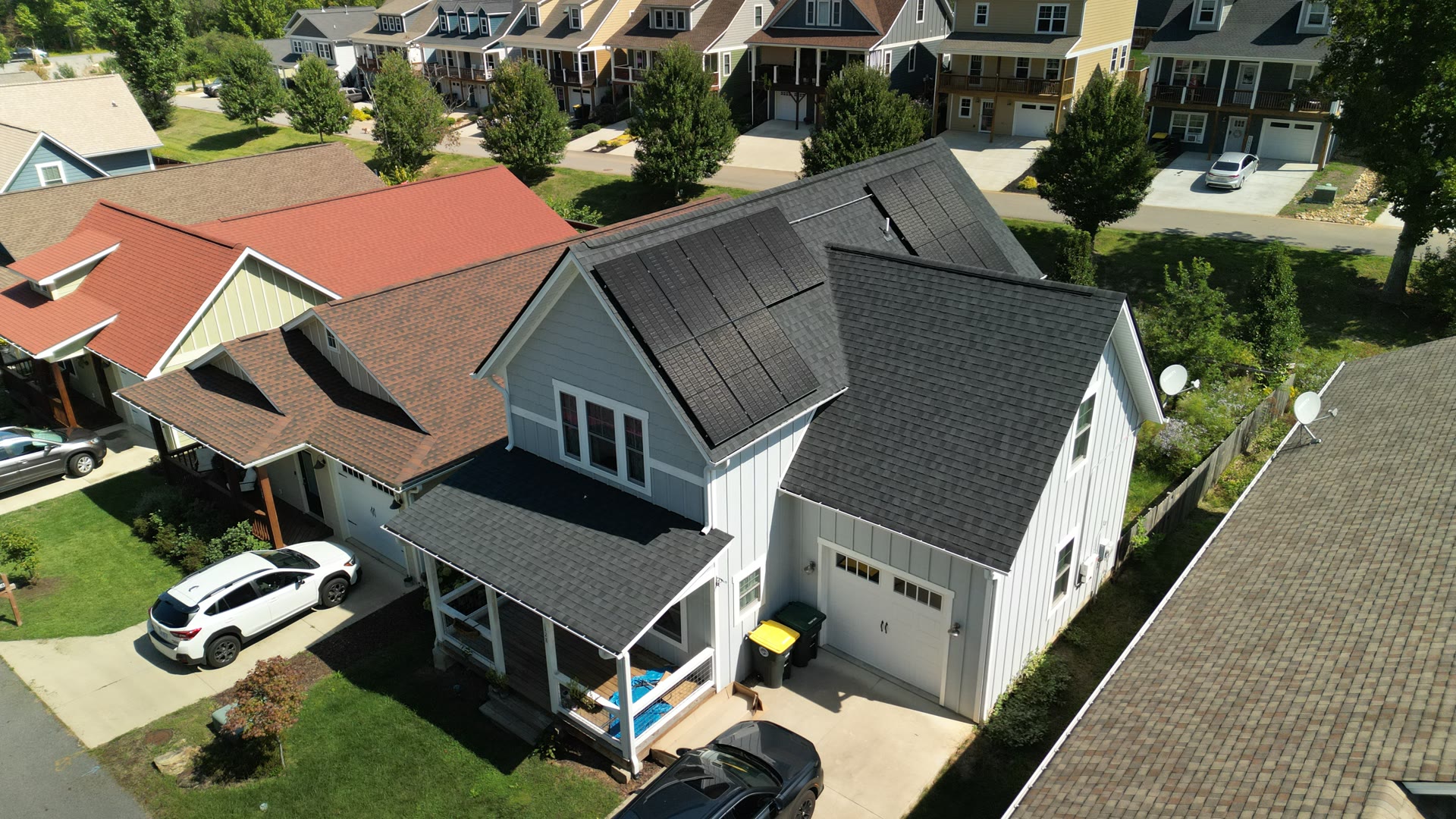
"Parker and his guys did a fantastic job replacing our roof which has 40 solar panels installed on it. We were promised a 10 year warranty on both the roof and solar, something other companies weren't able to do because they didn't do both trades. We had leaks before and now we don't - SO HAPPY"
Mike K. — Hendersonville, NC
"Parker looked carefully at my roof and fixed problems that I suspect others would have ignored. He was attentive to every place where water could get in, and reinforced those areas. In particular, he saw how the step flashing on one part of my roof was not adequate to keep everything dry. He went in and devised a solution that is substantially better than was there before. I highly recommend his work!"
Jason G. — Asheville, NC
"Parker got me a new roof! His expertise in removing/reinstalling solar panels and roofing made him the one-stop choice for services. The new roof looks great with no leaks!"
Thomas Y. — Fletcher, NC
Questions & Answers
FREQUENTLY ASKED QUESTIONS
From the ground: granules collecting in gutters and downspouts, dented metal (vents, flashing, gutters), and shingle debris in the yard. But hail bruising and wind-broken seals often show nothing from below — a free hand-and-drone inspection is the only way to know for sure.
STILL HAVE
A QUESTION?
The best roofing education is a free inspection with someone who will show you exactly what is going on up there. Book yours anywhere in Western North Carolina.
(828) 222-3276Free inspection · Fully insured · 10-year workmanship warranty